

As I sit here at the end of January, looking out my window at the hardened snow and gray skies, I can’t help but dream about the abundance that this next season will bring. I’m savoring a cup of stinging nettle tea, harvested and dried from the spring. Stinging Nettle, Urtica dioica, is one of the first plants to emerge after a long winter, and a nutritious one at that. It pops up ready to replenish and restore the soil and our bodies (if eaten) with nutritious vitamins and minerals.
However, many people lament over a stinging nettle patch in the garden because of the plant’s small, stinging hairs that can leave welts on the skin. But it has a good defense system for a reason. Urtica dioica is one of the most nutrient dense “weeds” there is, and being a native eco-type to our area, its benefits are commonly overlooked. We enjoy our stinging nettle fresh in meals or dried as tea for its nutritional and medicinal qualities.
Here are some ways in which Stinging Nettle can be medicinal:
All around Nutrition: Stinging Nettle contains Vitamins A & C, large amounts of iron, Calcium, Magnesium, Potassium, and more that make this plant what some would call a superfood.
For Those Who Menstruate: Because Stinging Nettle is so rich in iron, it helps aid menstrual cycles. From pain management, to replenishing iron stores, this is something I drink religiously when I’m menstruating.
Anti-Inflammatory: Stinging nettle has anti-inflammatory properties, which make it useful in treating a range of conditions such as osteoarthritis, rheumatoid arthritis, and gout.
Allergies: Nettle has been shown to help relieve allergy symptoms, such as hay fever, by blocking the release of histamine, a chemical that triggers allergic reactions.
Pain Relief: The anti-inflammatory properties of stinging nettle make it a natural pain reliever, particularly for joint pain and muscle aches. That is, however, if you can tolerate the initial sting.
Urinary Tract Health: Nettle has diuretic properties, which can help improve urinary tract health and prevent urinary tract infections.
Skin Health: Nettle has been used for centuries to treat skin conditions, including acne, eczema, and psoriasis, due to its anti-inflammatory and antioxidant properties
Boosts Immunity: Stinging nettle has immune-boosting properties, making it helpful in preventing and treating colds, flu, and other illnesses.
Supports Heart Health: Nettle has been shown to lower blood pressure, improve cholesterol levels, and reduce inflammation, all of which can help improve heart health.
In addition, we like to think Stinging Nettle tastes delicious. When cooked fresh it tastes similar to spinach with a bit more zing and tenderness to it. We add it to stir fries, make pesto, or blanch and freeze it. As tea, it gives a delicious herbal flavor, and goes well with some lemon balm and honey.
In the garden, nettle can become a bit weedy, but if managed well, it acts as an amazing fertilizer for plants. We actually welcome its spread in our garden, because wherever there’s nettle, there is also nutritious soil. As the plant dies back each year, its nutrients are returned to the soil and can benefit so many other plants around it. It is also a nitrogen fixer, can deter common garden pests, and attract other beneficial insects when it flowers.
We thus welcome nettle’s sting as it signifies the true start of spring and the coming months of growing plants. If you would like to purchase some dried nettle leaf, we still have some for sale. We also will be offering fresh nettle greens for sale in the spring.


Urtica Dioica
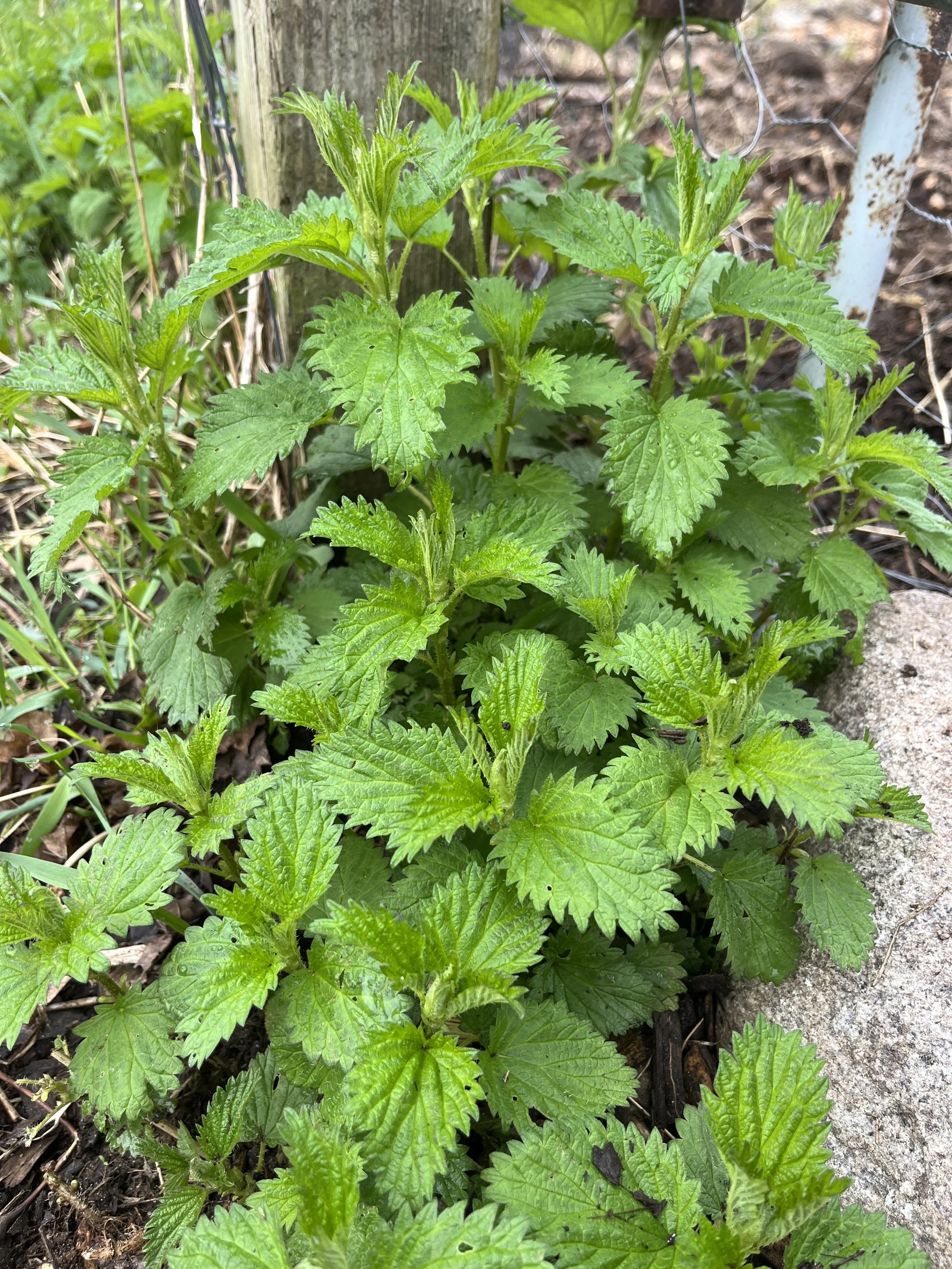
As its namesake suggests, stinging nettle can be a nuisance to the unknowing gardener as a simple brush on bare skin can result in an uncomfortable stinging sensation. But the plant has a good defense system for a reason. Stinging Nettle is one of the most nutrient dense plants you could ever find in the wild. It’s rich in protein, iron, vitamin A, C, D, and many more essential minerals. But try and eat them before they bloom/go to seed.
When cooked, the nettles break down making the plant an extremely versatile vegetable. Young and fresh leaves can be harvested and dried in summer to use as tea or soups. You can also eat them fresh by cooking them as you would spinach or kale. Some studies even suggest that brief exposure to the nettles on skin can actually stimulate healing, help with arthritis, and promote blood circulation. Once you get past the sting, you could call this wild acupuncture!
Hardiness: Zone 3
Soil: Thrives in deep, rich, and moist soils.
Light: Prefer full sun but will grow in part shade.
Options:
One potted plant for pick up only! We will email you pick up instructions if selected.
Small starter colony of dormant stinging nettle roots (5+ root systems)
Large starter colony of dormant stinging nettle roots (10+ root systems)

Only Available in Spring (Late March-Late June)
If you can handle the sting and are interested in purchasing fresh nettle greens and stems, please reach out! This powerhouse plant is quickly growing more and more popular amongst upscale restaurants and homesteaders. Nettles taste like a richer spinach with a slight tang and is packed with iron and protein. We have many pounds of nettle ready to be harvested, washed, and bagged for your convenience.
If you would like a larger amount, or don’t see your size here, please contact us directly using the “Contact” button at the top left of this page.
