

Sunchokes: The Delicious Yet Underrated Root Vegetable You Can Grow at Home
Sunchokes can be a bit polarizing. Love ‘em or hate ‘em, the fact is they are one of THE most abundant foods you can grow with almost no effort. Also known as Jerusalem artichokes, these knobby, ginger-like tubers can be one of the most rewarding crops for home gardeners and food lovers. They taste a bit like a potato with a hint of “artichokey” sweetness. And here at Whaleback Nursery, we grow several beautiful, productive varieties perfect for home gardens, small farms, and perennial food systems.
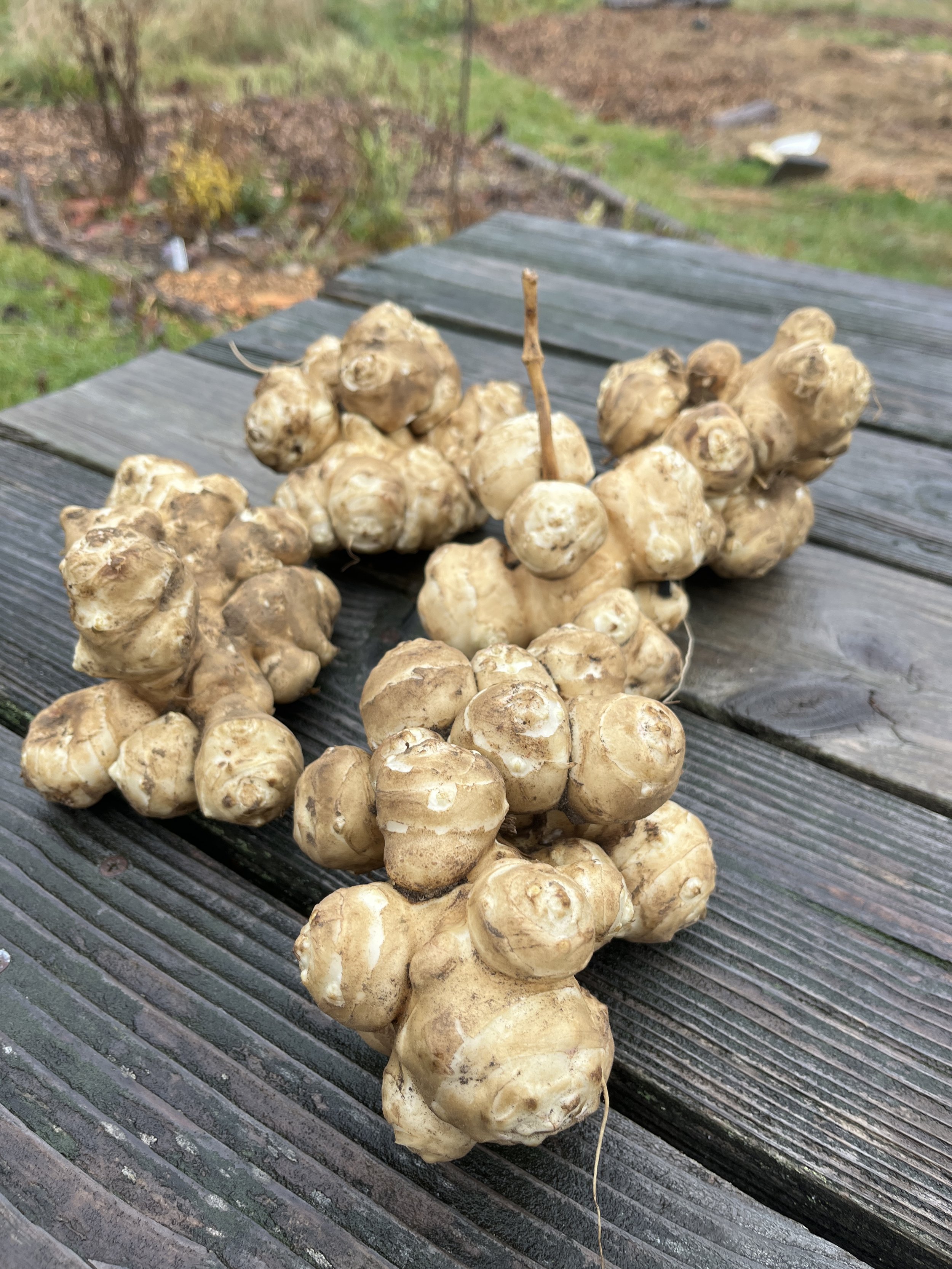
What Are Sunchokes Exactly?
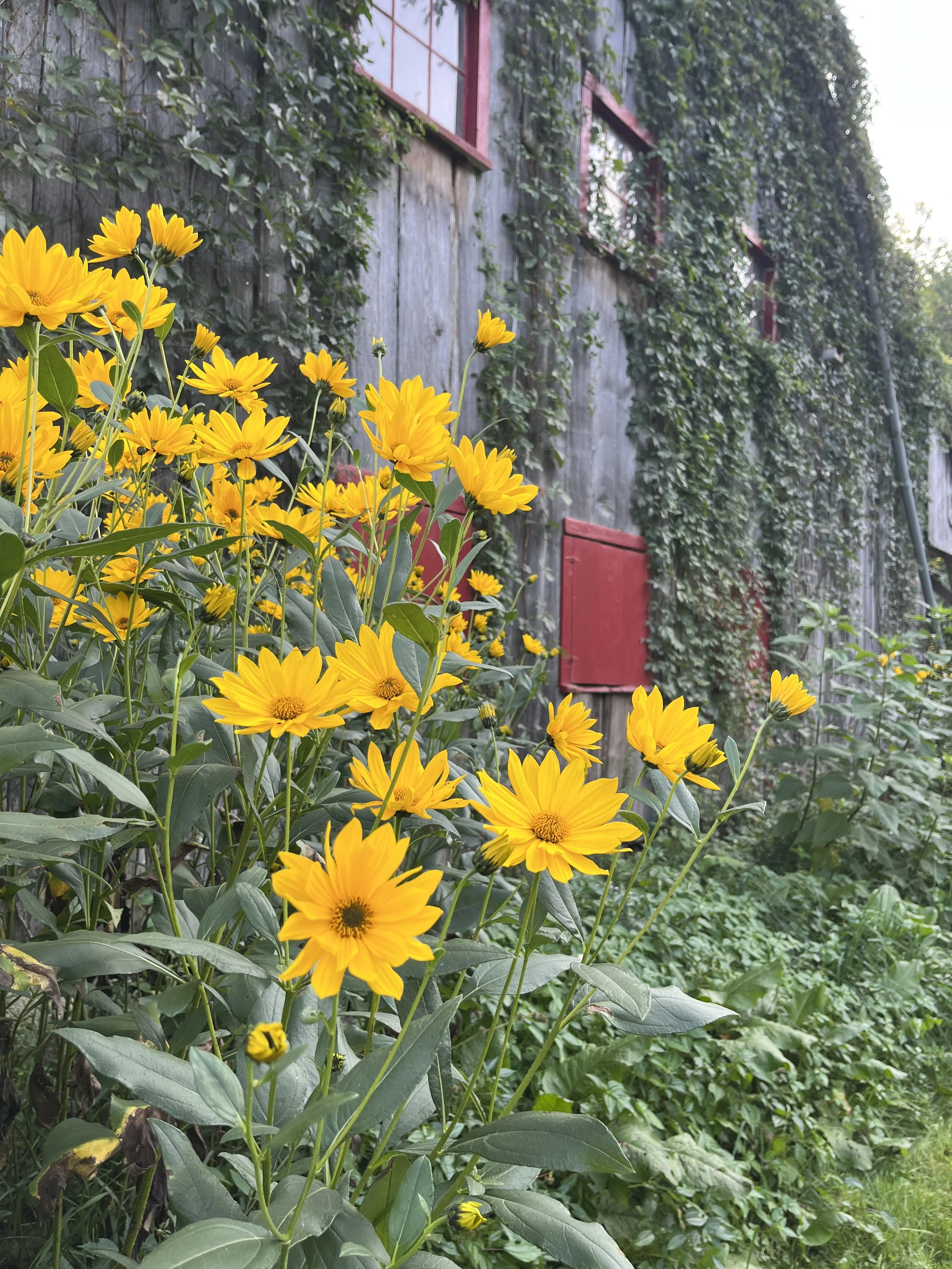
Sunchokes (Helianthus tuberosus) are a perennial root vegetable in the sunflower family. Most people don’t realize that they grow extremely tall—often 6–10 feet—and produce delicate little sunflowers. They also form large clusters of edible tubers underground. Despite the nickname “Jerusalem artichoke,” they aren’t related to artichokes or Jerusalem; although I think they taste a bit like an artichoke.
They thrive in northern climates, including Zone 5b here in Maine, and return reliably every year, making them a fantastic addition to your space. We don’t even replant them because it’s almost impossible to harvest them all, so they just keep coming back!
Why Grow Sunchokes?
If you’re new to sunchokes, here’s why people love them:
1. They’re incredibly easy to grow.
Sunchokes prefer full sun and well-drained soil, but they’ll tolerate clay, sand, rocky soil, and complete neglect. Plant once, harvest for years.
2. They’re prolific.
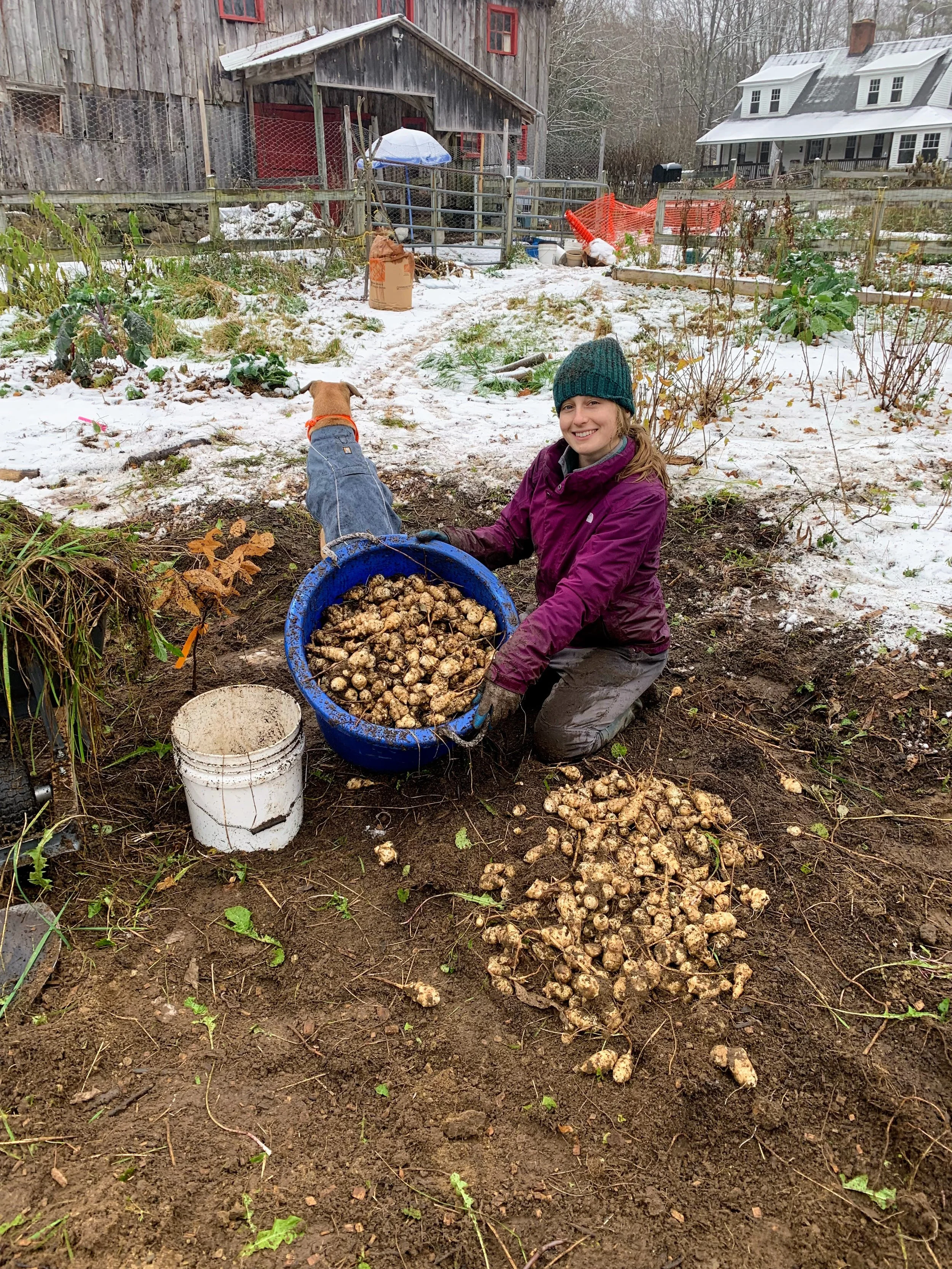
One small planting can yield several pounds of tubers per plant. They also spread readily, forming dense perennial patches. We planted just 8 tubers 4 years ago and now we harvest HUNDREDS of pounds every year.
3. They’re beautiful.
Their tall, sunflower-like growth adds height and texture to garden beds and food forests.
4. They’re delicious and versatile.
Roast them like potatoes, shave them raw into salads, pickle them, mash them, or turn them into creamy soups.
5. They’re a superstar permaculture crop.
Sunchokes are drought-tolerant, great for biomass, support pollinators, and help stabilize disturbed soils.
How to Grow Sunchokes
Growing sunchokes is simple and satisfying—even for people who swear they don’t have a green thumb.
Planting
Plant sunchoke tubers in early spring as soon as the soil can be worked or in late fall after harvesting. Each tuber should have at least one growth node (“eye”). Space them 12–18 inches apart in rows or patches. They prefer full sun but tolerate partial shade. If you’re planting in heavier clay, loosen the soil a bit or add compost to help the tubers form more evenly. Make sure you plant sunchokes where you have no problem with them being there forever!
Watering
Water well during establishment. Once they’re growing, sunchokes are completely hands-off and surprisingly drought-resistant.
Maintenance
These tall plants may need support in windy areas. They rarely suffer from pests or diseases. Keep an eye on the patch’s size—they’re vigorous growers.
Harvesting
Harvest sunchokes in late fall after frost, when the tops die back. Frost improves flavor, making the tubers sweeter. You can also harvest all winter long if your soil stays workable. Dig carefully, as the tubers can be knobby and irregular.
We have 3 different varieties here at the farm: Pink Crispy, Stampede, and Ruby Red. Check them out here!
How to Cook and Use Sunchokes
If you’re new to cooking sunchokes, start simple. Their flavor is best when roasted with olive oil, salt, and pepper—crispy edges and creamy centers. They’re also fantastic:
Sliced raw in salads
Pureed into creamy soups
Fried into chips
Pickled
Added to roasted vegetable medleys
Mashed like potatoes
Roasted and mashed into dips!
A quick tip: sunchokes contain inulin, a prebiotic fiber that can cause gas for some people. Cooking them thoroughly, pickling, or gradually adding them to your diet can help.
Sunchoke Varieties Currently Available
We’re proud to grow and offer healthy, vigorous, sustainably-grown sunchoke tubers for planting or just eating! Each variety has its own pros, and all thrive exceptionally well in Maine and northern climates.
Stampede Sunchokes
A classic white variety known for high yields, large tubers, and smooth skins. Stampede is reliable, hardy, and perfect for beginners.
Ruby Red Sunchokes
Stunning red skins with a slightly nuttier, sweet flavor. Ruby Reds are a beautiful, productive heirloom.
Pink Crispy Sunchokes
A specialty pink variety with crisp texture and excellent raw-eating qualities. These are exceptional for salads, pickles, and fresh snacking.
All our tubers are grown with care here at Whaleback Nursery. Once shipped, they are perfectly good to eat or plant!
Where to Plant Sunchokes in Your Garden
Because sunchokes are vigorous and perennial, it’s best to plant them where they can spread a little—along property edges, in perennial veg rows, in pollinator borders, or in your permaculture food forest. They’re also great for screening areas or creating living garden walls. Avoid planting them in beds where you’ll want to rotate annual crops each year.
