(Helianthus tuberosus)
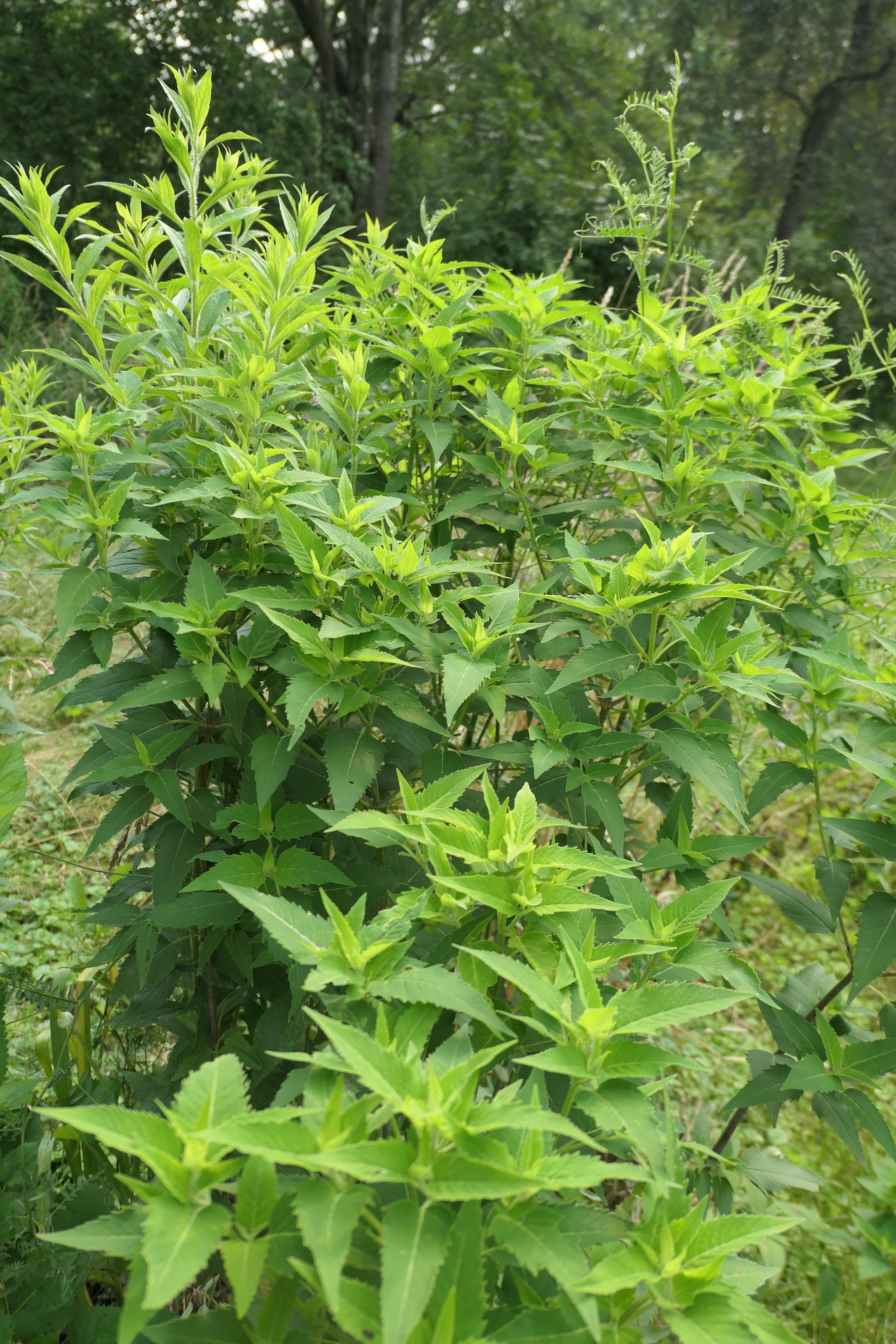
This highly productive tuber species is native to central North America and has been widely distributed by indigenous people who recognize its value as a perennial food crop. Also known as Jerusalem Artichokes, although it is not from Jerusalem and not related to the Artichoke, Sunchoke tubers are high in natural fibers and non-glycemic sugars and can be eaten raw or cooked. The plant can grow to 10 feet tall and features sunflower-esque yellow flowers. At the end of the growing season each plant will have produced a bounty of food and growing next year's crop is as simple as leaving a tuber in the ground. When you receive your tubers you can either store them to eat as you would a potato, or plant them directly into the soil to grow your own plant the following season.
Varieties:
Stampede: A powerhouse producer with tan, blocky tubers and a classic nutty-sweet flavor. Vigorous, reliable, and great for roasting, mashing, and winter storage.
Ruby Red/Cranberry Red: Red-skinned, crisp, and slightly sweeter than standard types. Holds color when cooked and performs well raw, roasted, or pickled. Strong yields with good drought tolerance.
Pink Crispy: Blush-pink skins and an ultra-crunchy, clean flavor made for raw eating, slaws, and quick pickles. Compact plants with excellent storage quality.
Skorospelka: Not pictured, but has reddish skin, white flesh. The product of a Soviet-era breeding program, Skorospelka produces a compact set of smooth tubers.
Variety Pack: A mix of all four, but mostly stampede!
Available in 1lb, 5lb, 10lb increments.
Sunchokes prefer well drained soil and can tolerate periods of drought but not wet soil.
Hardiness: Zone 3-8
Soil: Loose well drained soil
Light: Full Sun
SHIPPING NOTE: Our plants are dug and shipped according to the season and their natural dormancy. Fall orders typically ship in late October, and spring orders typically ship in late April/early May. Exact timing may vary depending on weather and plant readiness. You’ll receive an email as soon as your order ships.
(Helianthus tuberosus)
This highly productive tuber species is native to central North America and has been widely distributed by indigenous people who recognize its value as a perennial food crop. Also known as Jerusalem Artichokes, although it is not from Jerusalem and not related to the Artichoke, Sunchoke tubers are high in natural fibers and non-glycemic sugars and can be eaten raw or cooked. The plant can grow to 10 feet tall and features sunflower-esque yellow flowers. At the end of the growing season each plant will have produced a bounty of food and growing next year's crop is as simple as leaving a tuber in the ground. When you receive your tubers you can either store them to eat as you would a potato, or plant them directly into the soil to grow your own plant the following season.
Varieties:
Stampede: A powerhouse producer with tan, blocky tubers and a classic nutty-sweet flavor. Vigorous, reliable, and great for roasting, mashing, and winter storage.
Ruby Red/Cranberry Red: Red-skinned, crisp, and slightly sweeter than standard types. Holds color when cooked and performs well raw, roasted, or pickled. Strong yields with good drought tolerance.
Pink Crispy: Blush-pink skins and an ultra-crunchy, clean flavor made for raw eating, slaws, and quick pickles. Compact plants with excellent storage quality.
Skorospelka: Not pictured, but has reddish skin, white flesh. The product of a Soviet-era breeding program, Skorospelka produces a compact set of smooth tubers.
Variety Pack: A mix of all four, but mostly stampede!
Available in 1lb, 5lb, 10lb increments.
Sunchokes prefer well drained soil and can tolerate periods of drought but not wet soil.
Hardiness: Zone 3-8
Soil: Loose well drained soil
Light: Full Sun
SHIPPING NOTE: Our plants are dug and shipped according to the season and their natural dormancy. Fall orders typically ship in late October, and spring orders typically ship in late April/early May. Exact timing may vary depending on weather and plant readiness. You’ll receive an email as soon as your order ships.


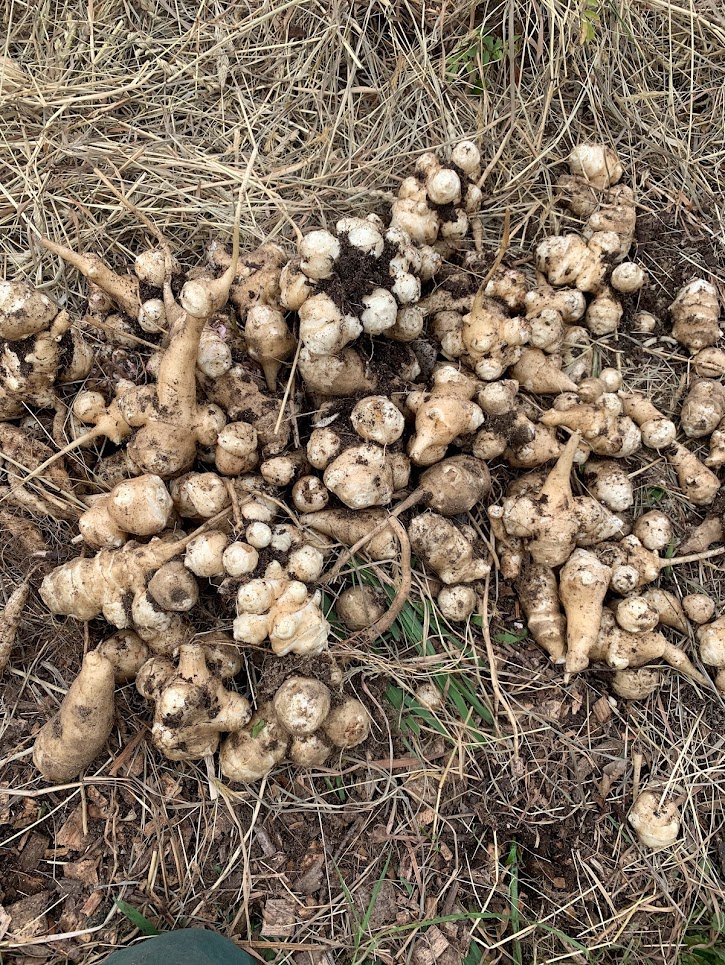 Image 1 of 8
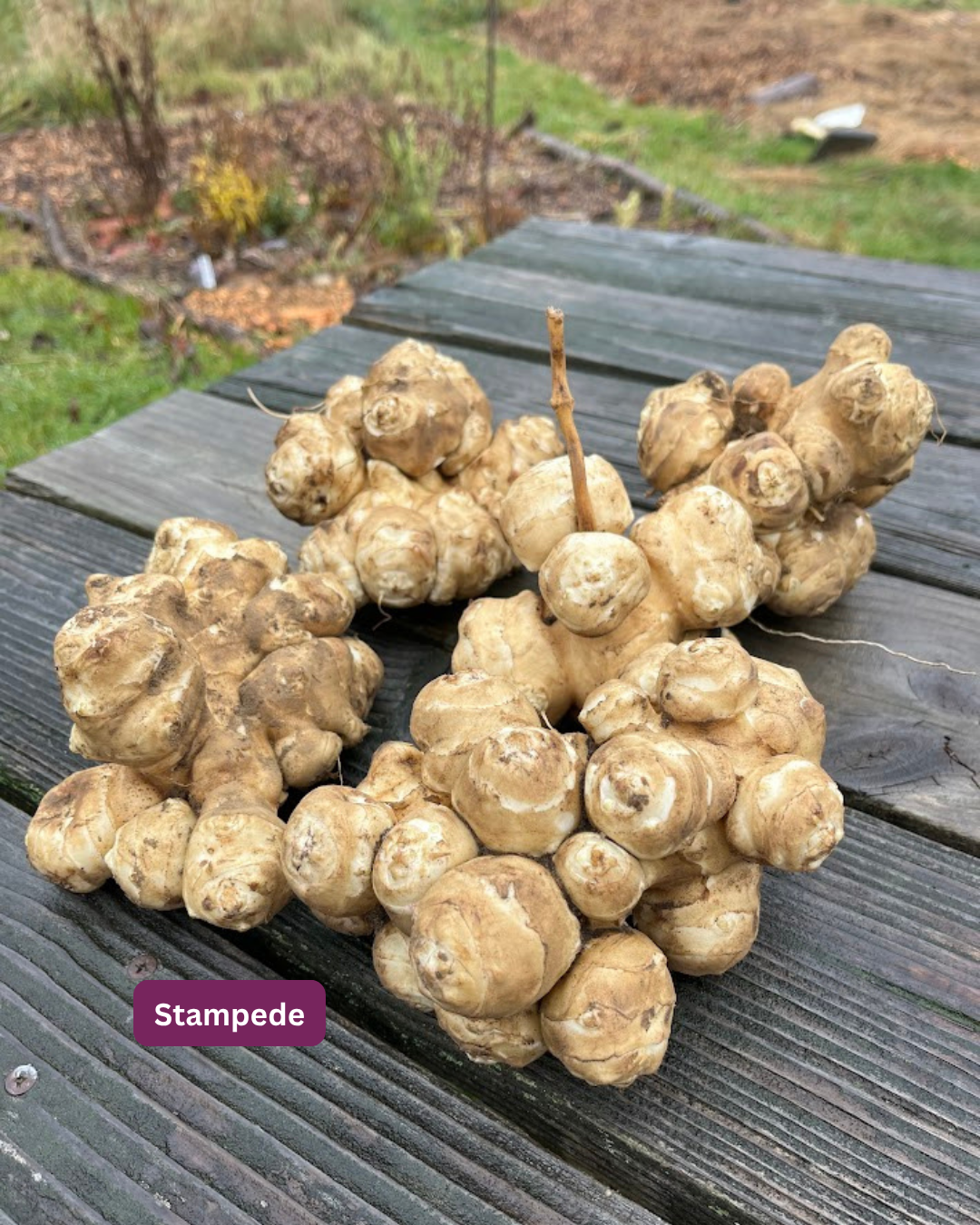 Image 2 of 8
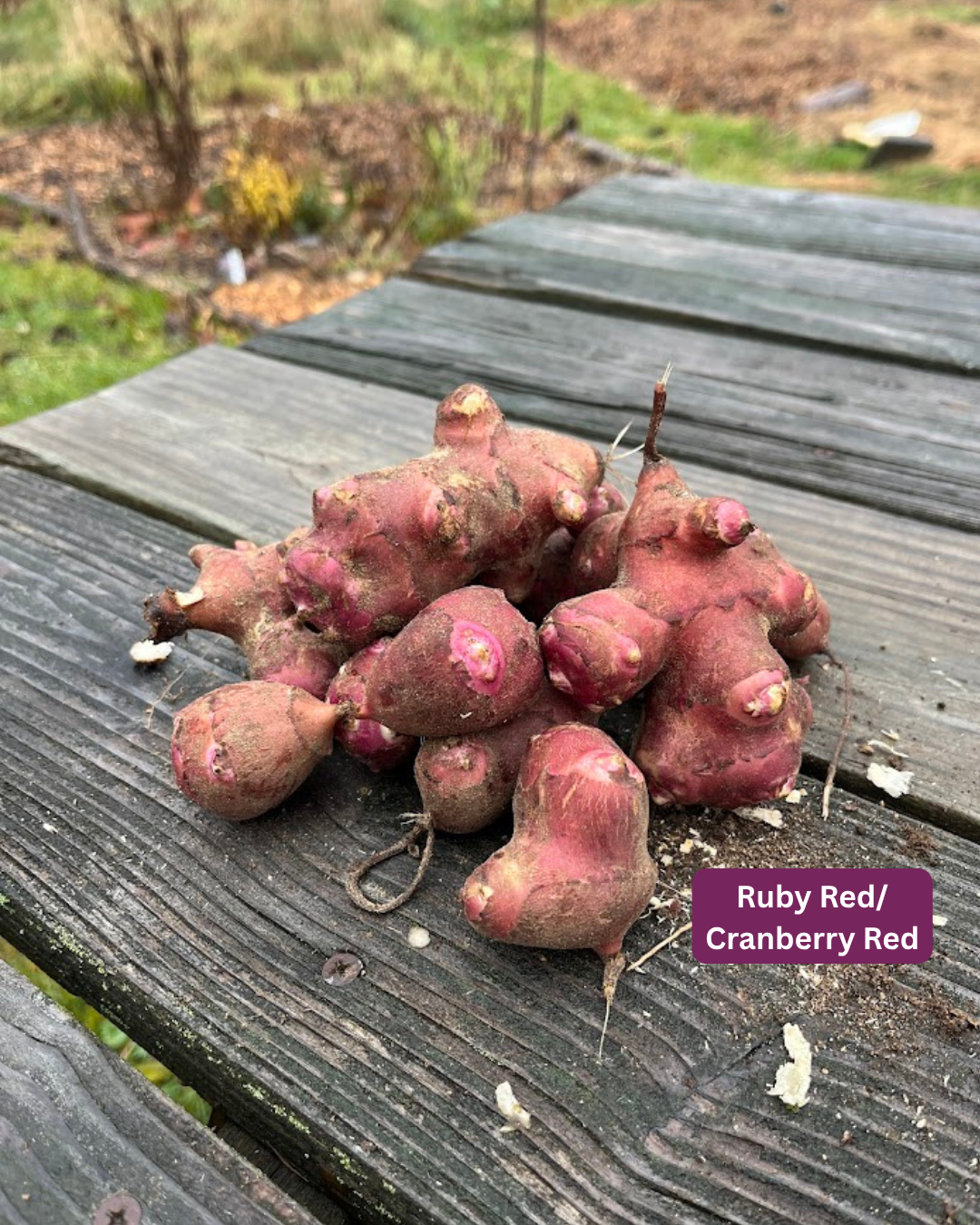 Image 3 of 8
 Image 4 of 8
 Image 5 of 8
 Image 6 of 8
 Image 7 of 8
 Image 8 of 8