Image 1 of 5
 Image 2 of 5
 Image 3 of 5
 Image 4 of 5
 Image 5 of 5
A classic wildflower native to much of North America, Black-Eyed Susan offers a vibrant splash of golden yellow to any landscape. Interestingly, this hardy plant can act as a biennial or perennial depending on growing conditions. Even when short-lived, it readily self-seeds and spreads, forming cheerful clusters in fields, gardens, and meadows. Exceptionally drought-tolerant, Black-Eyed Susan also thrives in damper soils, making it a versatile choice. In summer, its bright blooms attract tiny bees, and in fall, birds feast on the seed heads. Growing up to 3 feet tall, it’s the perfect wildflower for the front of your garden beds.
Light: Full sun to partial shade
Soil Moisture: Dry to medium
Soil: Well-drained, sandy, loamy, or rocky soils
Height: 1–3 feet
Spread: 1–2 feet
Bloom Time: June–October
Flower Color: Golden yellow with dark brown centers
Hardiness Zones: 3–9
Growth Habit: Biennial or short-lived perennial; readily self-seeds
Native Range: Eastern and central North America, including Maine
Options:
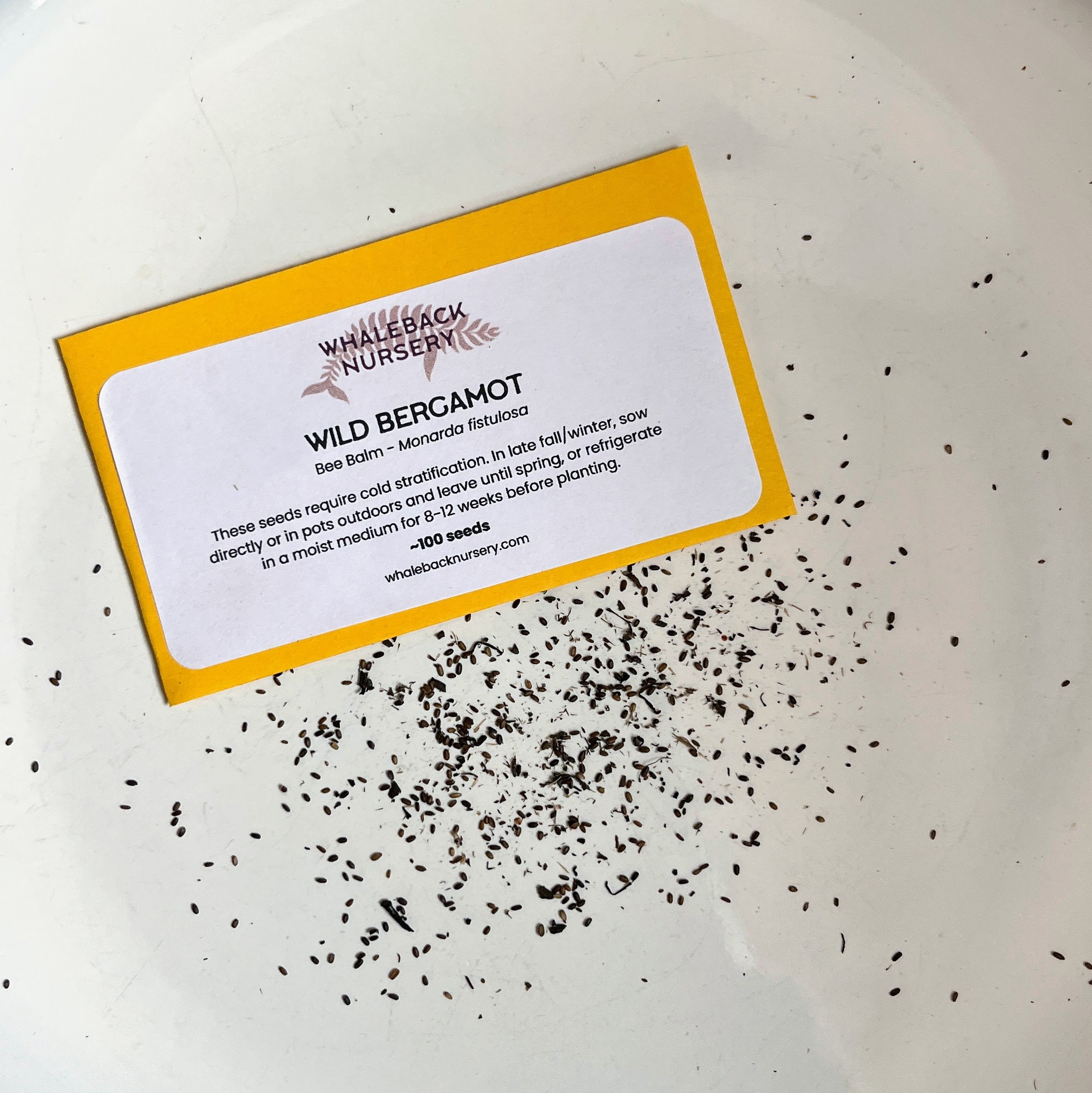
Packet of approximately 100 seeds.
Bare Root Plants can be planted into loose soil in the fall or spring and kept moist until new growth emerges.