 Image 1 of 3
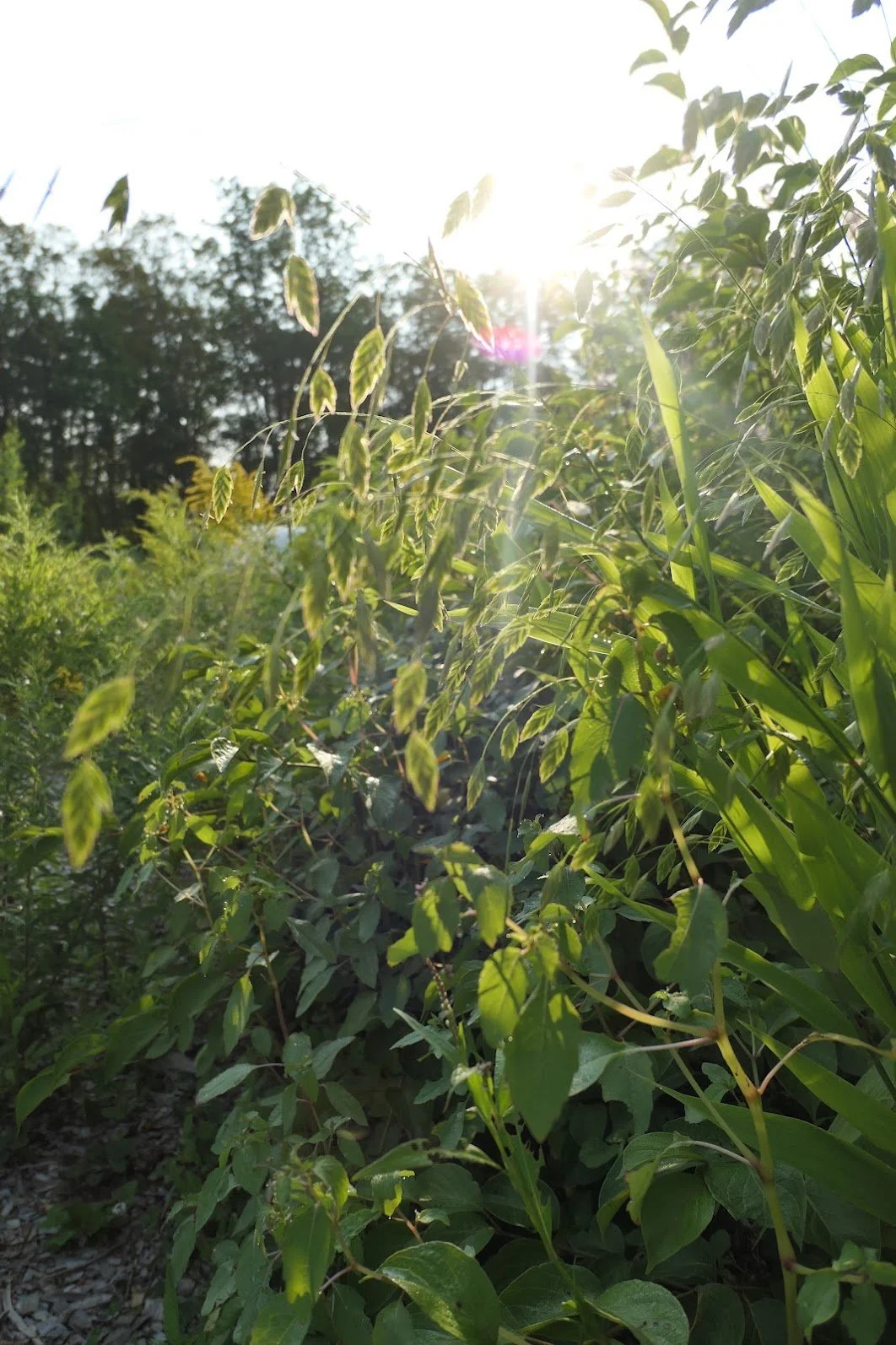 Image 2 of 3
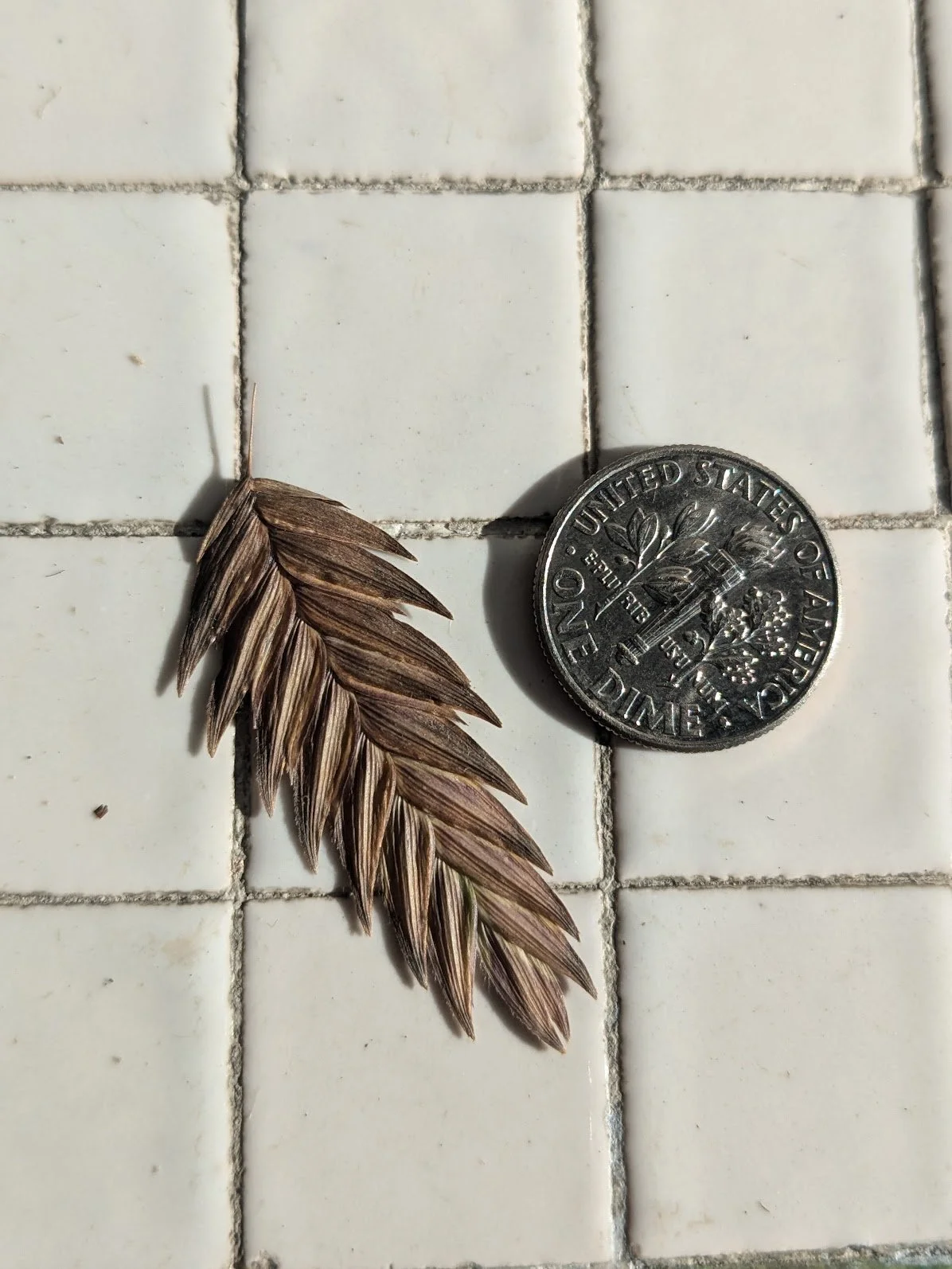 Image 3 of 3
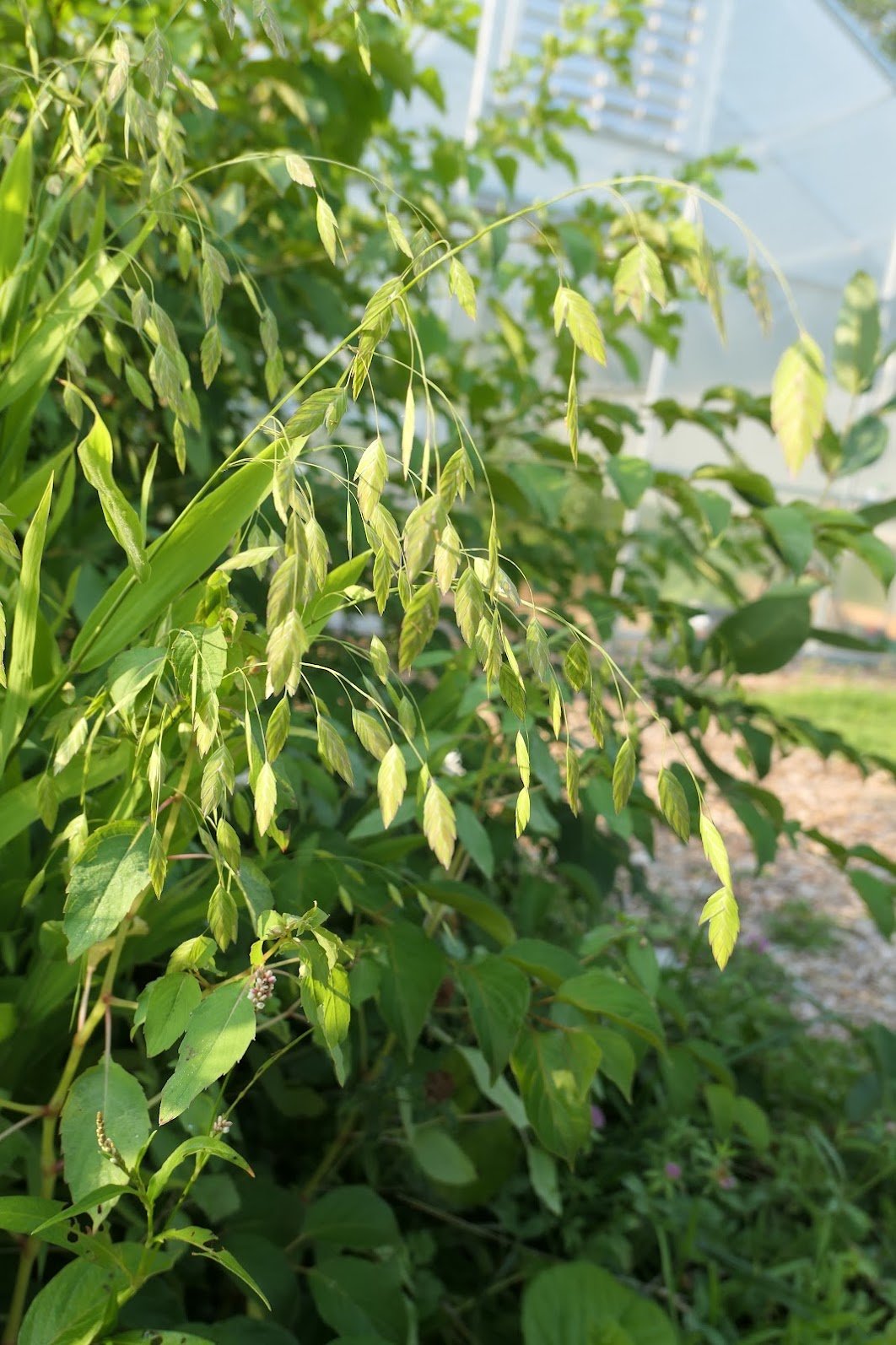
River Oats (Chasmanthium latifolium), also known as Northern Sea Oats or Indian Wood Oats, is an attractive perennial grass recognized for its distinctive, flattened seed heads that dangle gracefully from arching stems. Emerging green in summer and gradually turning coppery bronze in fall, the ornamental seed heads provide movement, texture, and seasonal interest well into winter.
One of the more shade-tolerant North American grasses, River Oats thrives in partial shade and moist, well-drained soils. Its broad, bamboo-like foliage creates a lush appearance in woodland gardens, shaded borders, and naturalized landscapes. Once established, it tolerates occasional drought and periodic flooding, making it adaptable to a variety of growing conditions.
Light: Partial shade to full shade; tolerates full sun with adequate moisture
Soil Moisture: Medium to moist; tolerates occasional wet conditions
Soil: Adaptable to sandy, loamy, and clay soils
Height: 2–4 feet
Spread: 1–3 feet per clump; may spread farther through self-seeding
Bloom Time: July–September
Flower Color: Green, maturing to tan and coppery bronze
Hardiness Zones: 5–9
Growth Habit: Clump-forming, spreading perennial grass
Native Range: Central and eastern North America, primarily south and west of New England
Variants:
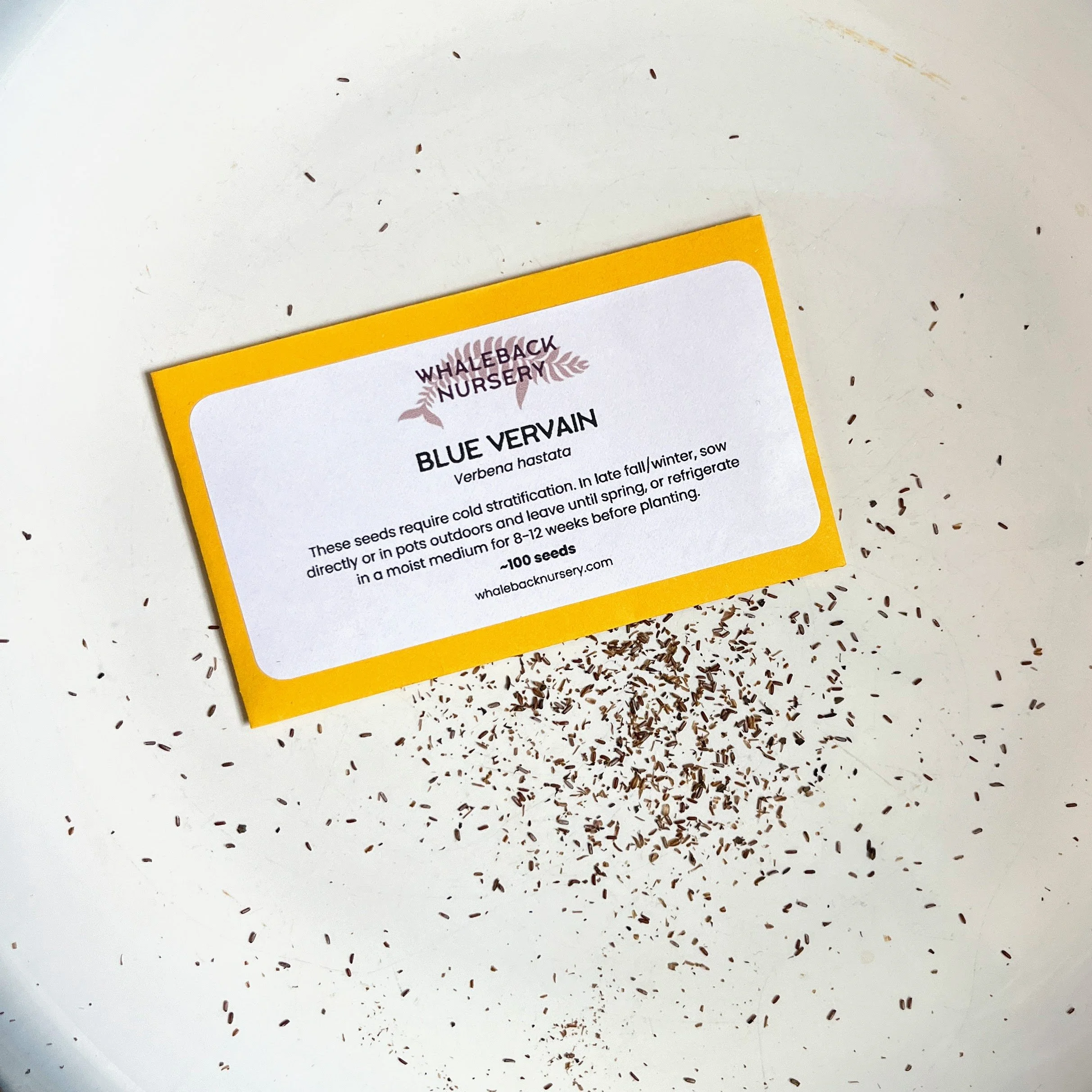
Seeds: A packet of approximately 25 sees.
Bare - Root Plant: A bundle of ~3 rooted stalks