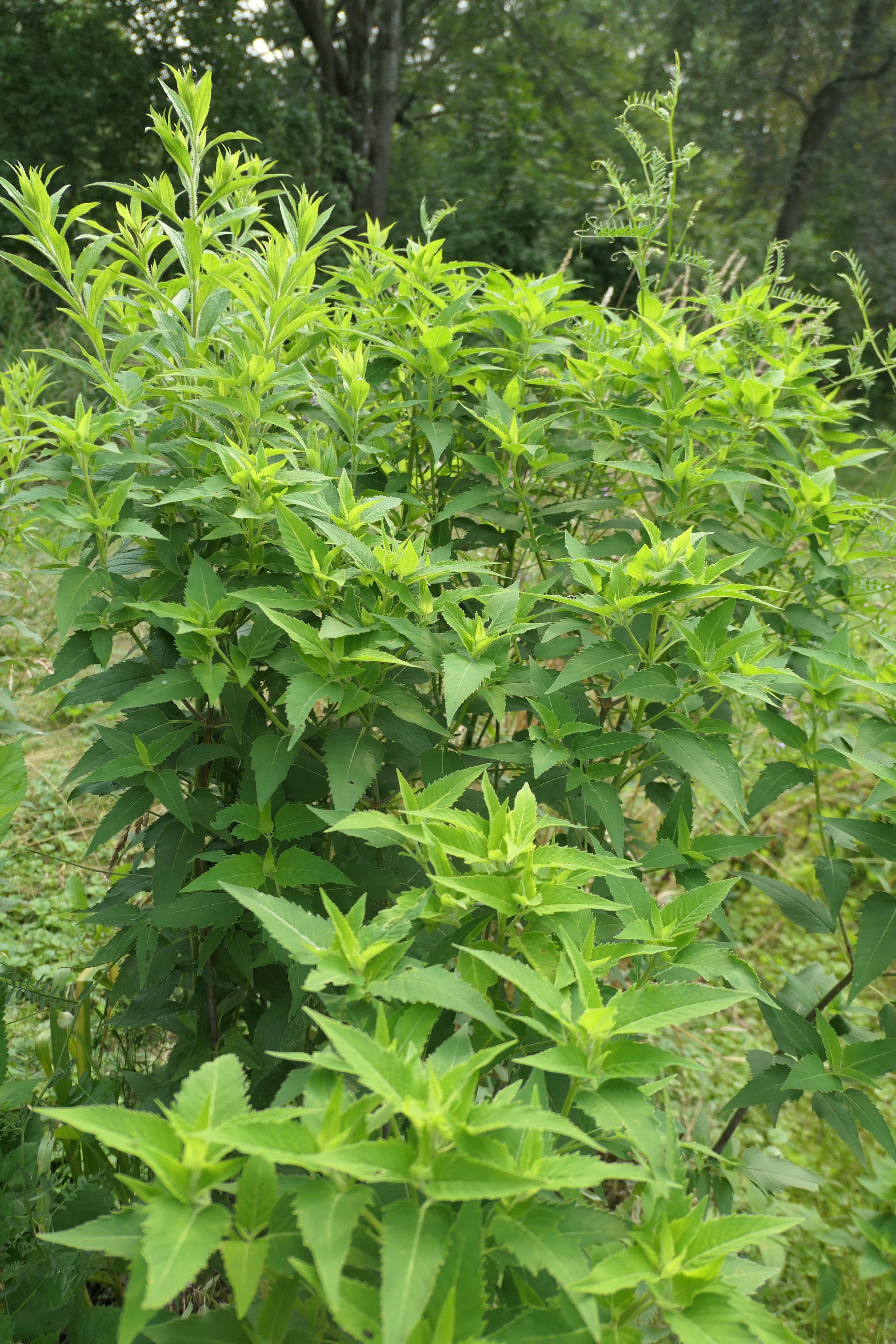
This highly productive tuber species is native to central North America and has been widely distributed by indigenous people who recognize its value as a perennial food crop. Also known as Jerusalem Artichokes, although it is not from Jerusalem and not related to the Artichoke, Sunchoke tubers are high in natural fibers and non-glycemic sugars and can be eaten raw or cooked. The plant can grow to 10 feet tall and features sunflower-esque yellow flowers. At the end of the growing season each plant will have produced a bounty of food and growing next year's crop is as simple as leaving a tuber in the ground. When you receive your tubers you can either store them to eat as you would a potato, or plant them directly into the soil to grow your own plant the following season.
Varieties:
Stampede: A powerhouse producer with tan, blocky tubers and a classic nutty-sweet flavor. Vigorous, reliable, and great for roasting, mashing, and winter storage.
Ruby Red/Cranberry Red: Red-skinned, crisp, and slightly sweeter than standard types. Holds color when cooked and performs well raw, roasted, or pickled. Strong yields with good drought tolerance.
Pink Crispy: Blush-pink skins and an ultra-crunchy, clean flavor made for raw eating, slaws, and quick pickles. Compact plants with excellent storage quality.
Skorospelka: Not pictured, but has reddish skin, white flesh. The product of a Soviet-era breeding program, Skorospelka produces a compact set of smooth tubers.
Variety Pack: A mix of all four, but mostly stampede!
Available in 1lb, 5lb, 10lb increments.
Growing Conditions
Light: Full sun
Soil Moisture: Dry to medium; prefers consistent moisture
Soil: Adaptable to sandy, loamy, and well-drained soils
Height: 6–10 feet
Spread: 2–4 feet or more through underground tubers
Bloom Time: August–October
Flower Color: Golden yellow
Harvest Time: Late fall through early spring, when soil is workable
Hardiness Zones: 3–9
Growth Habit: Tall, vigorous perennial that spreads through underground tubers
Native Range: Central and eastern North America; native status in Maine varies by source, with many populations associated with cultivation.


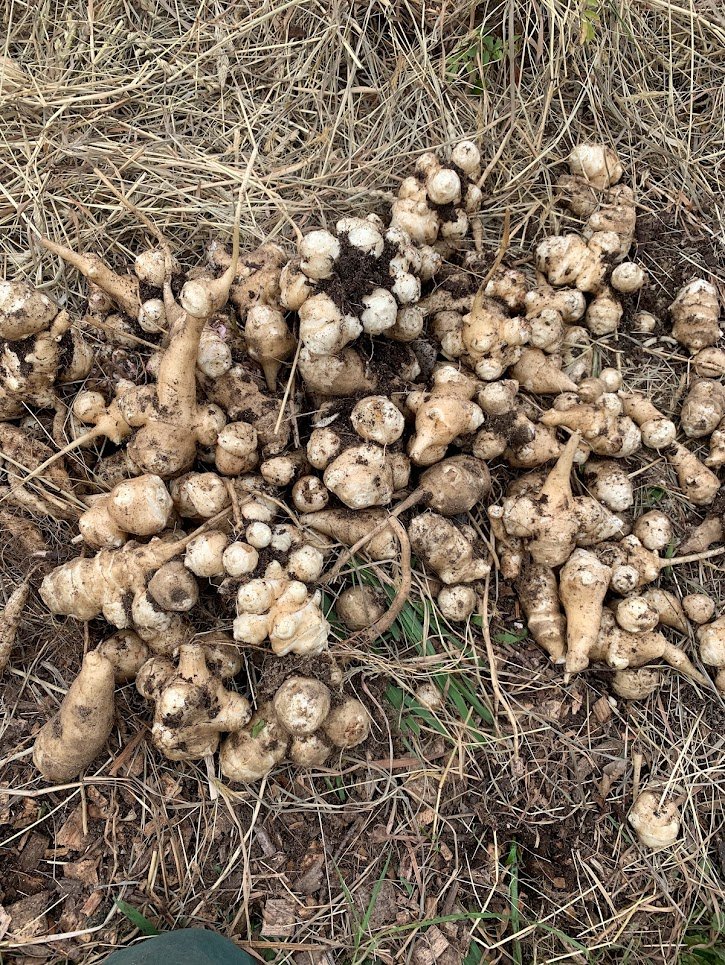 Image 1 of 8
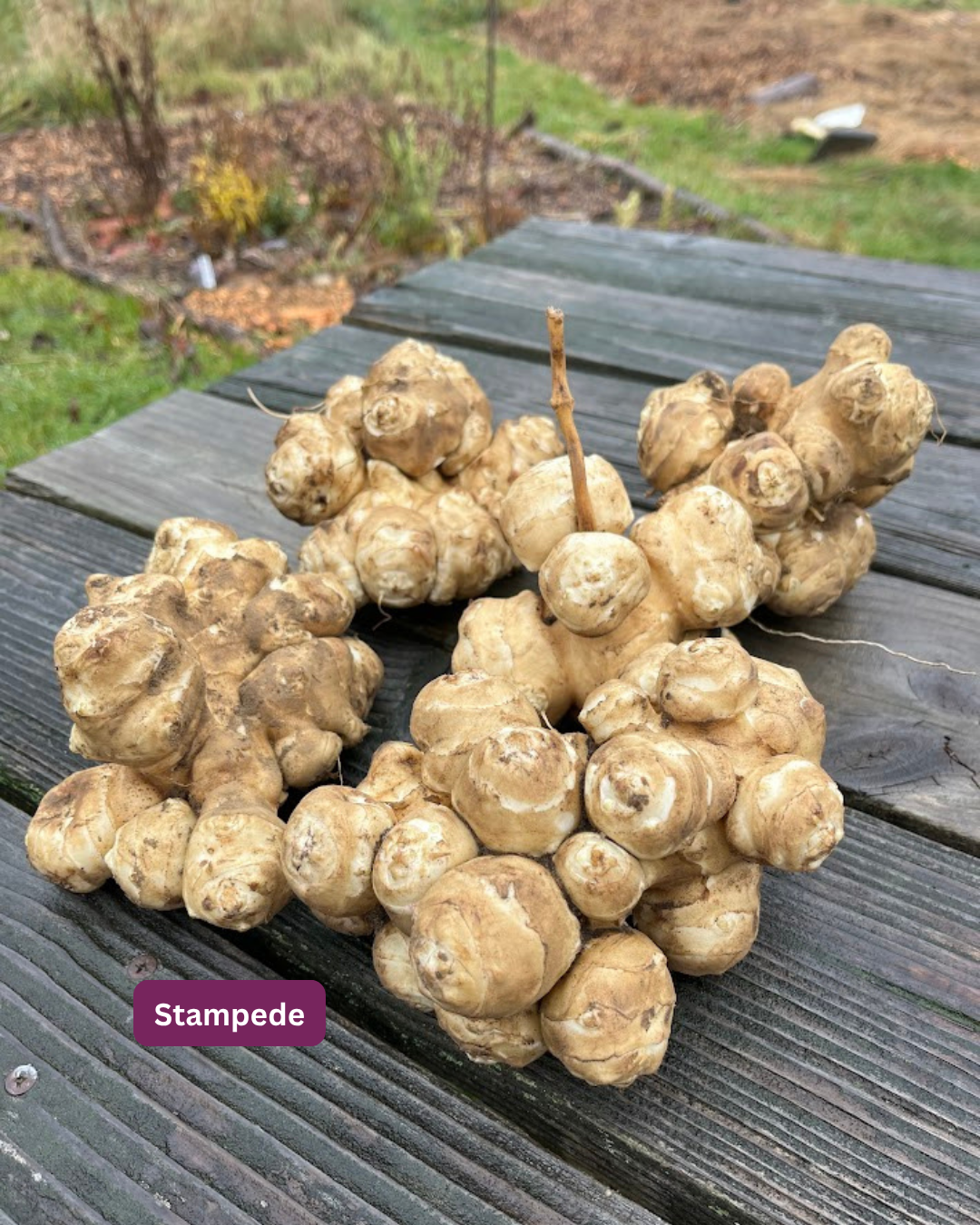 Image 2 of 8
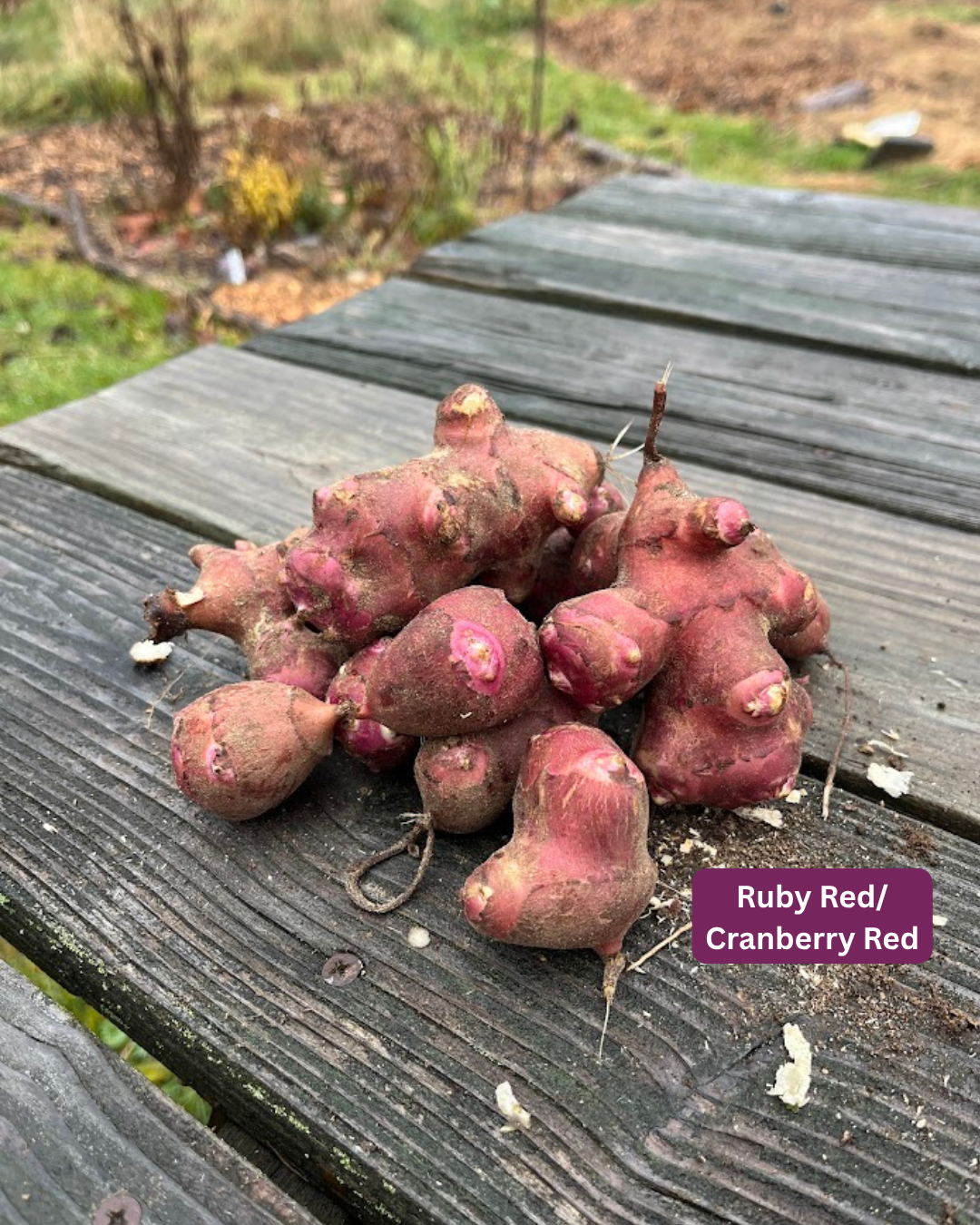 Image 3 of 8
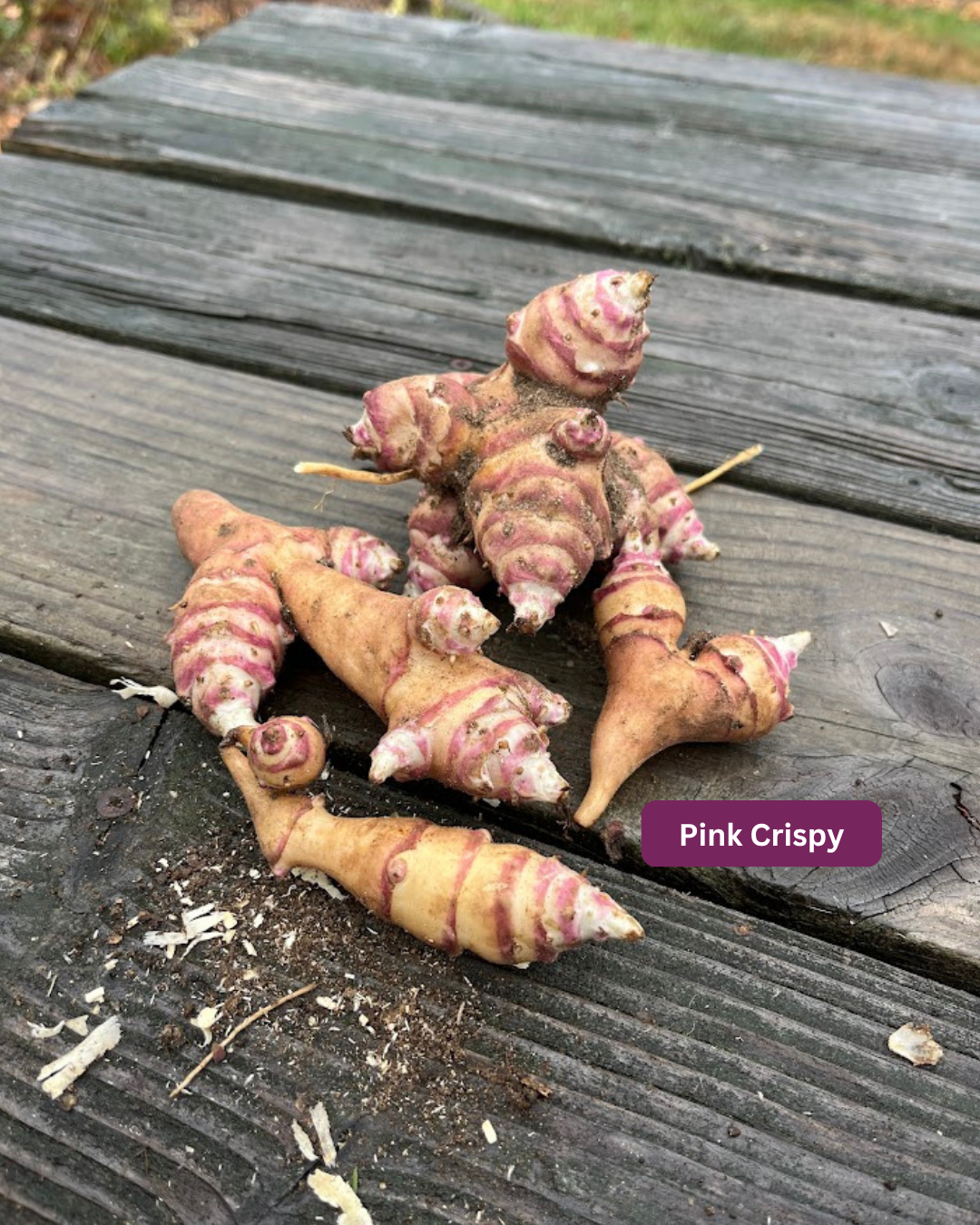 Image 4 of 8
 Image 5 of 8
 Image 6 of 8
 Image 7 of 8
 Image 8 of 8