 Image 1 of 3
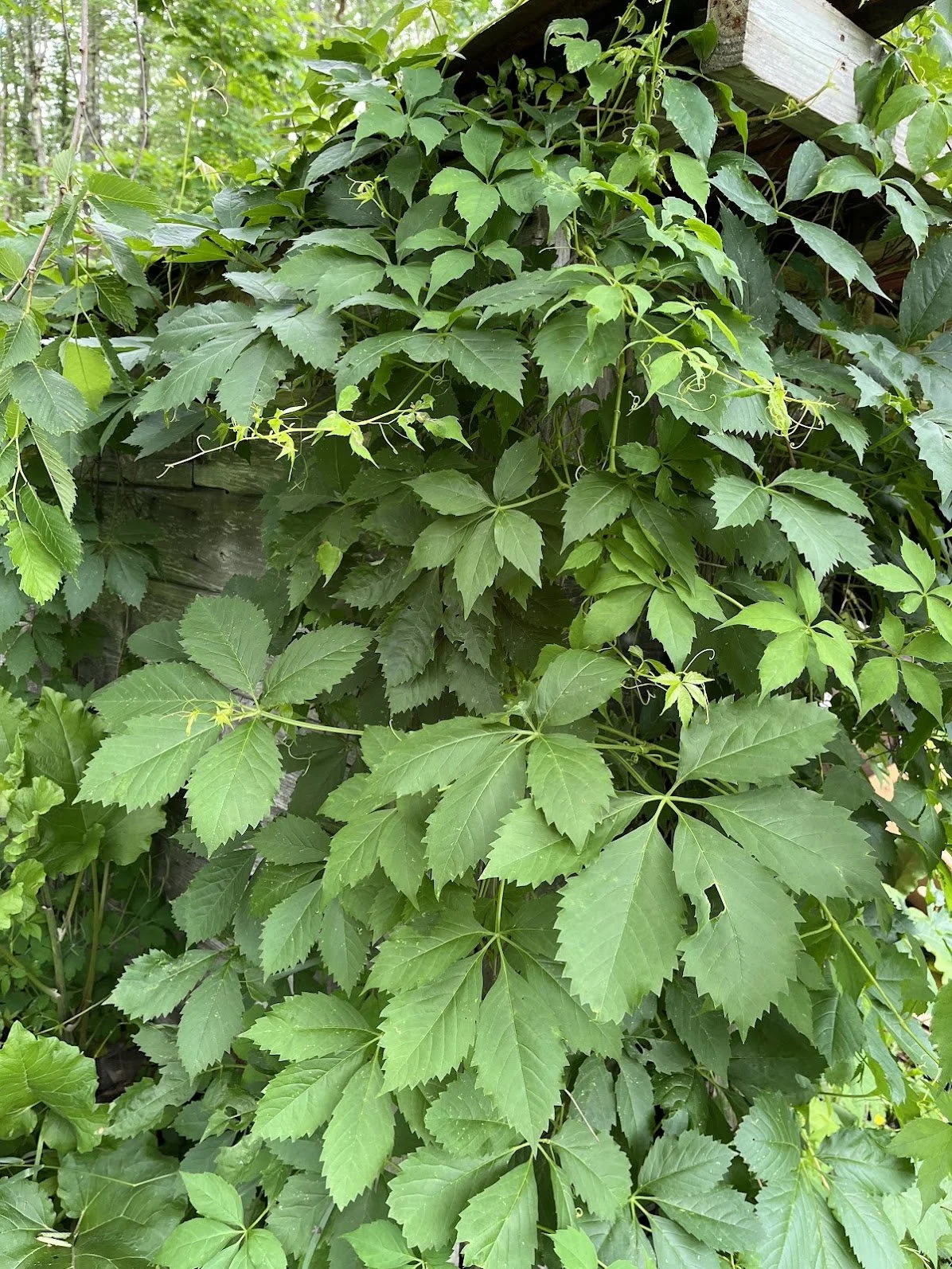 Image 2 of 3
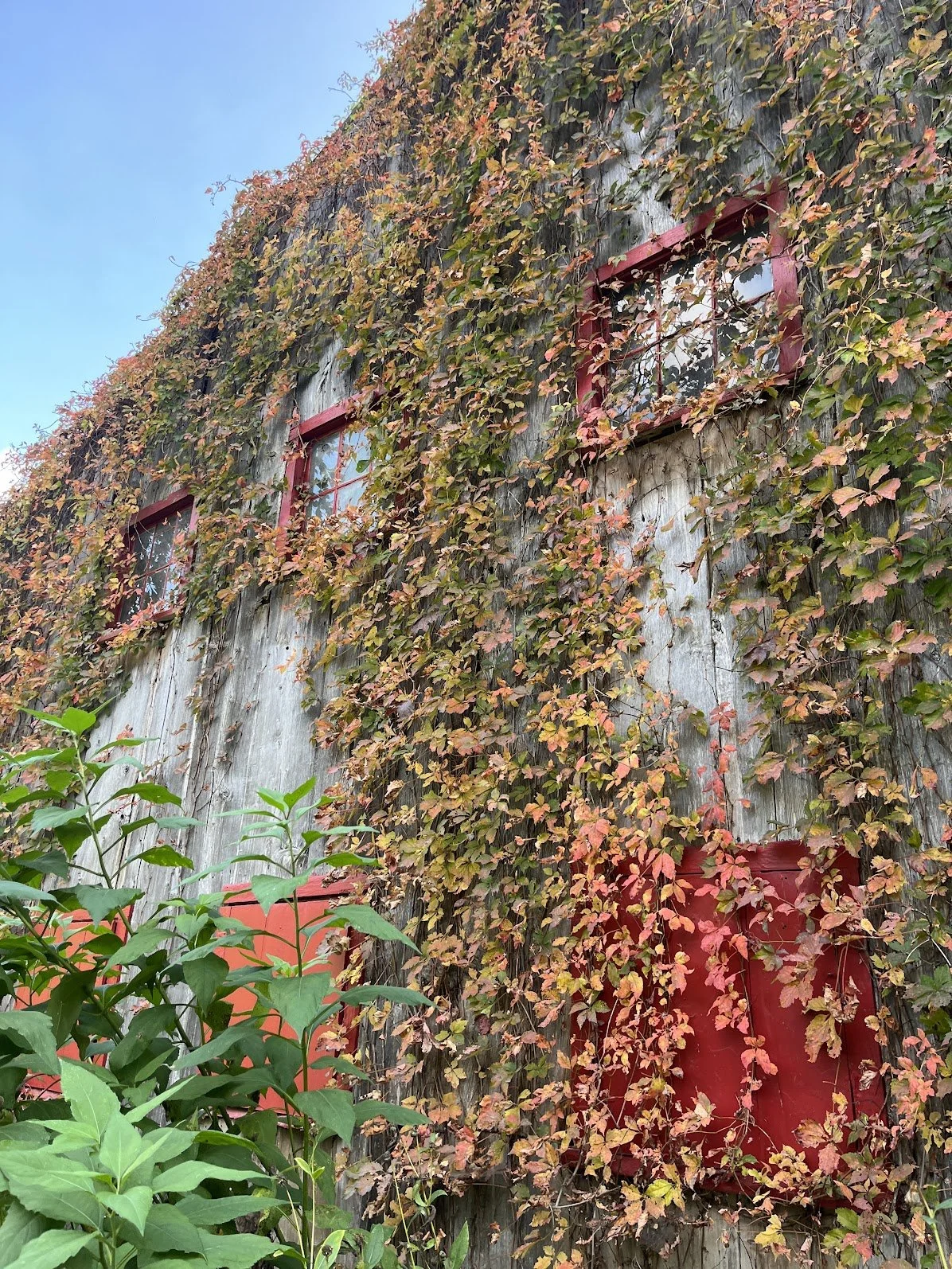 Image 3 of 3
Parthenocissus quinquefolia
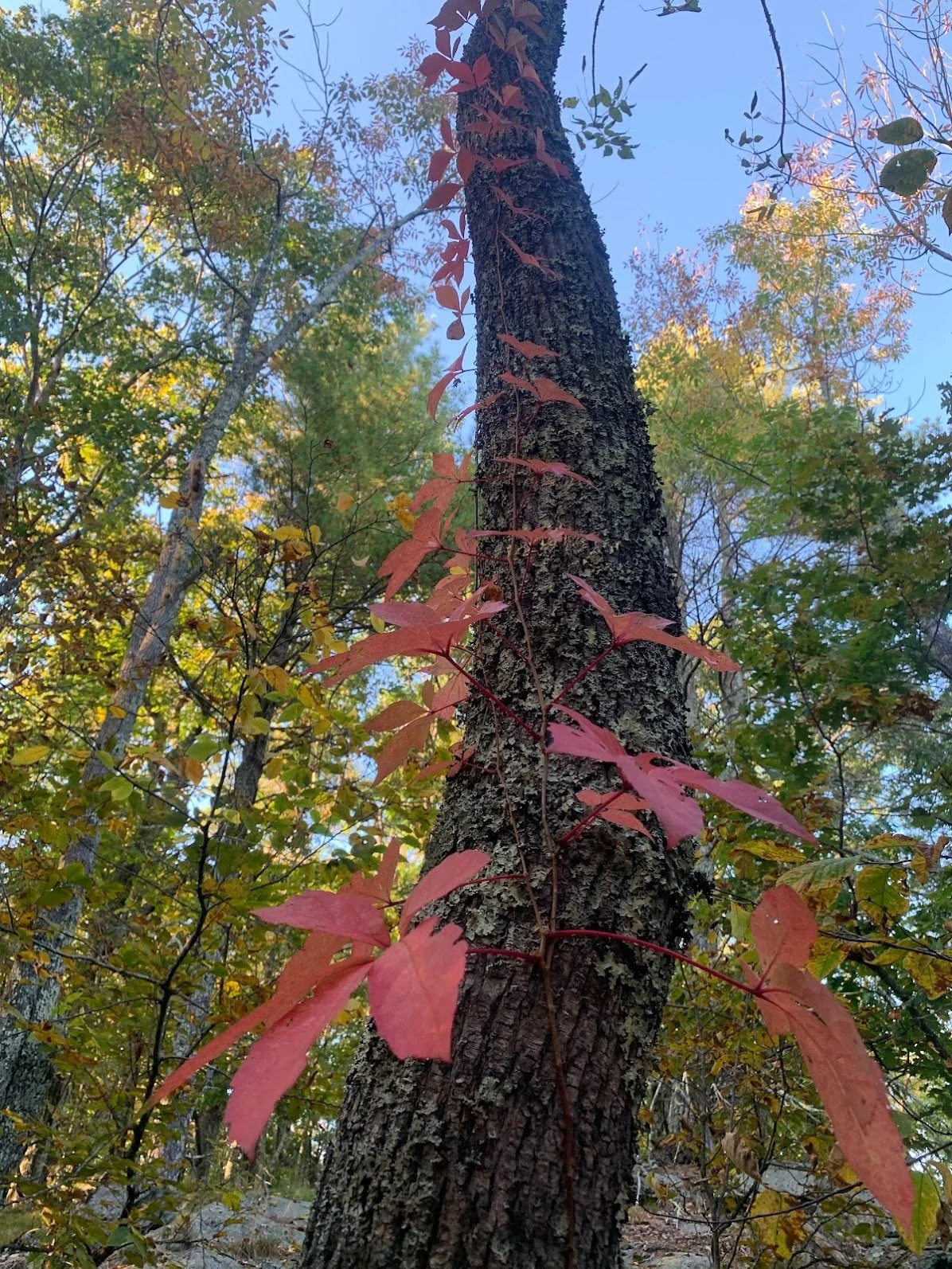
This native vine is extremely divisive among gardeners, but given the right situation, it has an important role to play in many settings. The first source of division is its ability to grow, sprawl, and climb over just about anything. Adhesive pads allow it to grow up walls and trees, and unlike twirling vines like bittersweet or honeysuckle, it won’t damage its support. Here on the farm, it grows up our barn, and when it threatens to overwhelm the barn, we cut it back to the base to allow it to regrow. Virginia creeper can also sprawl across the ground, and we have seen it outcompete large patches of poison ivy. We have seen it grow quickly in both shady and sunny areas, making it a very adaptable plant. If given a large enough area to grow, or if you’re willing to prune it back regularly, it can be managed.
Another source of division is that some people say exposure to Virginia Creeper’s sap causes a rash similar to poison ivy. Personally, we walk through this plant bare-legged and weed it bare-handed and have never had a rash, and we are highly allergic to poison ivy.
Ultimately, this is a native vine that in the fall produces huge crops of berries that are an important food source for migrating birds. The leaves also turn brilliant shades of purple, orange, and red before falling to the ground. We love this vine and given the right spot, I’m sure you will too!
Hardiness: Zone 3-10
Soil: Slightly dry to medium wet soils
Light: Part sun to full shade
Parthenocissus quinquefolia
This native vine is extremely divisive among gardeners, but given the right situation, it has an important role to play in many settings. The first source of division is its ability to grow, sprawl, and climb over just about anything. Adhesive pads allow it to grow up walls and trees, and unlike twirling vines like bittersweet or honeysuckle, it won’t damage its support. Here on the farm, it grows up our barn, and when it threatens to overwhelm the barn, we cut it back to the base to allow it to regrow. Virginia creeper can also sprawl across the ground, and we have seen it outcompete large patches of poison ivy. We have seen it grow quickly in both shady and sunny areas, making it a very adaptable plant. If given a large enough area to grow, or if you’re willing to prune it back regularly, it can be managed.
Another source of division is that some people say exposure to Virginia Creeper’s sap causes a rash similar to poison ivy. Personally, we walk through this plant bare-legged and weed it bare-handed and have never had a rash, and we are highly allergic to poison ivy.
Ultimately, this is a native vine that in the fall produces huge crops of berries that are an important food source for migrating birds. The leaves also turn brilliant shades of purple, orange, and red before falling to the ground. We love this vine and given the right spot, I’m sure you will too!
Hardiness: Zone 3-10
Soil: Slightly dry to medium wet soils
Light: Part sun to full shade